

Does a brake-pad warning mean I need new discs?
A pad-wear warning does not measure disc thickness. The workshop must assess the discs separately before recommending replacement.
Does your Mercedes need new brake discs—or only brake pads?
Mercedes brake disc replacement in Dubai should follow an inspection of the discs, pads and surrounding brake components. Noise, vibration or a pad-wear message alone does not confirm that the discs need replacing.
At WagenKenner in Al Quoz 4, we assess the brake condition before recommending work. The inspection helps explain whether your Mercedes needs pads, discs or attention to another brake component.
This guide explains warning signs, inspection checks, replacement decisions and cost factors. For wider maintenance support, explore our Mercedes service and repair in Dubai.
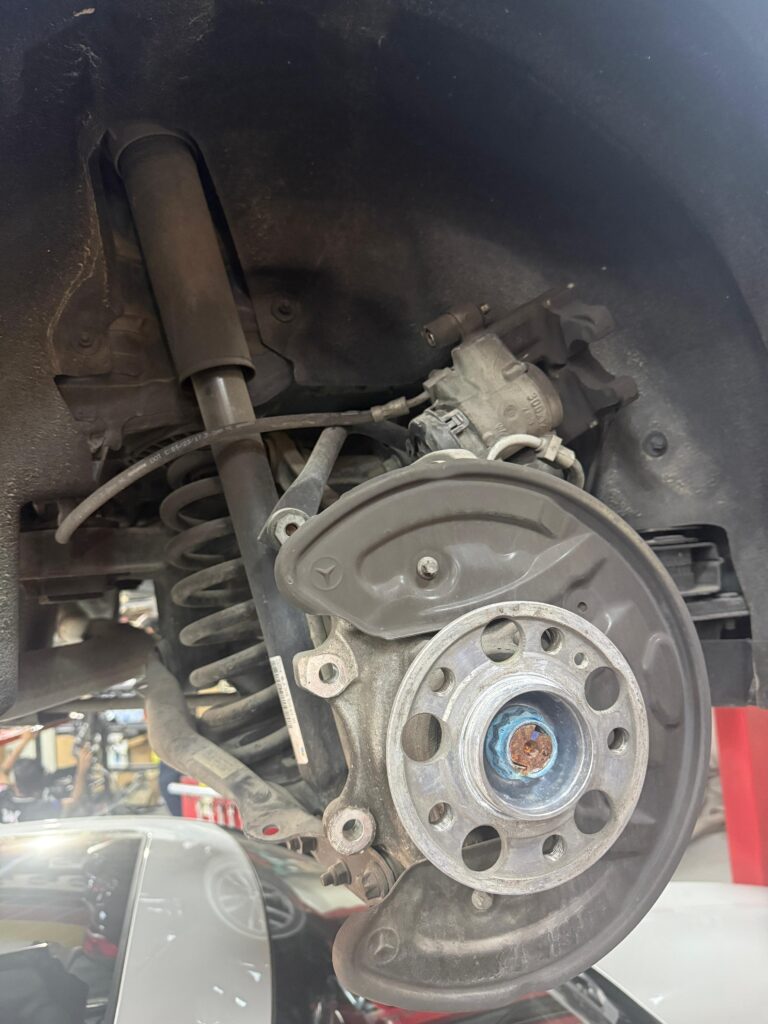
Your Mercedes may need new brake discs if inspection finds excessive wear, damage or measurements outside the limits specified for its braking system. A brake-pad warning alone does not mean the discs also need replacing.
At WagenKenner in Al Quoz 4, Dubai, we explain the inspection findings and proposed work before you approve the repair.
Changes in braking feel, noise or appearance deserve attention. However, these signs do not confirm that your Mercedes needs brake disc replacement. Inspection should identify the cause.
You may feel shaking through the steering wheel or a pulse through the pedal during normal braking. Describe when it happens and whether it changes with speed. The discs and other possible sources need checking.
Repeated noise can come from pads, discs or nearby components. A squeal alone does not prove disc damage. However, harsh grinding needs urgent attention, especially if braking performance also changes.
Visible grooves or a raised outer edge can prompt a closer inspection. Appearance alone cannot establish remaining disc life. A technician should check both faces and measure the disc against its specified limits.
Arrange a brake inspection when a pad-wear message appears. It does not measure disc thickness or automatically mean you need new discs. The pads and discs require separate checks.
Describe the symptom clearly: Tell us whether it happens only while braking, during the first few stops or throughout the journey. This helps guide the inspection.
Once the symptoms are clear, the next step is to understand what caused the wear or damage. Replacing discs without addressing a related fault may leave the original problem unresolved. Here are the factors an inspection should consider.
Brake discs wear through use. However, driving conditions, pad condition and faults elsewhere in the braking system can affect how evenly they wear.
Friction gradually removes material from the pads and discs. Their service life varies with driving habits, vehicle load and brake specification. Therefore, mileage alone cannot determine when replacement is due.
Repeated braking from speed or prolonged braking on descents creates substantial heat. Excessive heat can affect the friction surfaces. Dubai traffic also means frequent brake use, but local weather alone does not prove disc damage.
Severely worn pads can allow their metal backing to contact the disc and damage its surface. Prompt attention to pad wear can help avoid this additional damage. Read our Mercedes brake pad replacement guide for more about pad-related concerns.
A sticking caliper or pad can keep friction applied after you release the pedal. This can cause excess heat and uneven wear. Any related fault needs attention alongside the damaged parts.
Light surface rust after moisture exposure is different from deep corrosion or pitting. Uneven pad deposits can also contribute to braking vibration. Inspection should distinguish these conditions before recommending new discs.
The answer depends on the measured wear, disc condition and braking performance. Normal pedal feel does not prove that the discs are within their service limits.
Ask whether the discs are already outside their limits or whether replacement is being planned for later. If inspection confirms unsafe wear or damage, arrange repairs before further driving.
Follow the instructions for the exact message in your owner’s manual and arrange a prompt inspection. A pad-wear message does not confirm disc failure. However, do not assume that a fixed number of safe kilometres remains.
Reduced stopping ability, a suddenly soft pedal, severe pulling or a stop-vehicle brake message needs urgent action. Stop safely and arrange recovery rather than driving to the workshop.
At WagenKenner, the assessment starts with your symptoms and the brake specification fitted to your Mercedes. We use the findings to explain whether replacement is needed and what else requires attention.
We check the vehicle details and ask when the noise, vibration or warning appears. Previous brake work also helps guide the inspection. Brake sizes can differ within the same Mercedes model range.
We examine the inner and outer disc surfaces, alongside pad thickness and wear patterns. This helps identify scoring, corrosion, damage or uneven contact that may not be visible through the wheel.
For conventional metal discs, thickness measurements are compared with the limits for the fitted disc. If braking vibration is present, further checks may include thickness variation and disc runout. Carbon-ceramic brakes require their own assessment criteria.
Depending on the findings, we check caliper operation, pad movement, mounting surfaces and signs of overheating or leakage. Wheel or suspension checks may also be needed when the symptoms suggest another source.
The outcome: A clear explanation of the findings and proposed work. Any additional assessment or repair is discussed before you approve it.
The repair scope depends on the inspection findings and your Mercedes brake specification. Your quotation should identify the axle, parts and labour included.
The quote should state whether the work covers the front or rear brakes. It should also identify the correct disc specification and agreed parts brand. Replacing front discs does not automatically mean the rear discs need replacement.
We specify the compatible pads and any required wear sensors or fitting hardware. These items should appear clearly on the quotation, so you can see exactly what the proposed repair includes.
The work includes preparing the mounting surfaces, fitting the approved components and checking brake operation. Where applicable, the vehicle-specific parking-brake procedure forms part of the work.
Additional work needs separate approval. Caliper repairs, brake-fluid replacement, hoses, wheel bearings and suspension repairs are not automatically included in a brake-disc quotation. We explain any additional findings before proceeding.
Once you approve the quotation, we carry out the agreed work using the procedure for your Mercedes braking system.
We confirm the axle, disc specification, pads and any required fitting parts. This helps avoid selecting components by model name alone.
We remove the relevant brake components and inspect the exposed mounting surfaces. If this reveals an additional fault, we explain it before extending the repair.
We prepare the mounting surfaces and install the agreed parts to the applicable specifications. Where required, we follow the correct electronic parking-brake service procedure.
Before moving the vehicle, we check pedal response and the assembled brakes. A controlled road test follows when safe and appropriate, with attention to braking performance and the original concern.
We explain the completed work and the bedding-in guidance for the fitted parts. We also highlight any remaining recommendations and symptoms that need prompt attention.
This guide covers general brake-disc replacement considerations for Mercedes models such as the A-Class, C-Class, E-Class, S-Class, GLA, GLC and GLE. However, the correct parts and inspection limits depend on the braking system fitted to your vehicle.
Different versions of the same model can use different disc sizes, calipers and pads. Therefore, share your VIN when requesting a quotation so we can confirm the required specification.
AMG and carbon-ceramic brakes: These require specification-specific checks. The wear limits and replacement approach for conventional metal discs should not be applied automatically to carbon-ceramic systems.
We confirm the expected completion time after checking your Mercedes brake specification, the repair scope and parts availability. A front-axle replacement involves different work from replacing both front and rear discs.
Before arranging your visit: Share your VIN, symptoms and preferred appointment. Ask us to confirm parts availability and the expected collection time before planning to wait at the workshop.
Mercedes brake disc replacement cost depends on the fitted braking system and the work required. A useful quotation identifies the parts, axle and labour included, rather than giving one price for every Mercedes.
Disc size and construction affect parts pricing. The cost also changes depending on whether you need front brakes, rear brakes or work on both axles. Share your VIN so we can check the correct fitment.
Compare the named parts brand and specification. Also check whether the quotation includes pads, wear sensors and required fitting hardware. A disc-only price is not directly comparable with a complete axle quotation.
Additional faults can change the scope and labour. For example, a caliper problem needs its own assessment and quotation. We explain additional work and obtain your approval before proceeding.
Compare like-for-like quotations: Check the axle, disc quantity, parts brands, pads, sensors, labour and total including VAT. Ask what is excluded before approving the work.
Before approving the work, check that the quotation clearly identifies the following:
Ask the workshop to explain the inspection findings behind the recommendation. This makes it easier to understand why discs, pads or other components are included.
Explore these guides for help understanding brake concerns and planning your Mercedes maintenance.
Find guidance on other symptoms or warning messages affecting your Mercedes.
Explore Mercedes maintenance and repair support at WagenKenner in Al Quoz 4.
Understand pad-related concerns alongside the separate checks needed for your brake discs.
Learn about WagenKenner’s brake inspection and repair services for European vehicles.
Unsure whether your Mercedes needs discs, pads or another brake repair? Contact WagenKenner in Al Quoz 4 to arrange an inspection and discuss the findings before approving work.
Share your VIN, mileage and symptoms. If you have a dashboard warning or an existing quotation, include a photograph so we can understand your enquiry.
WhatsApp Us About Your Mercedes BrakesIf braking performance is reduced or your vehicle instructs you to stop, arrange recovery instead of driving to the workshop.
A pad-wear warning does not measure disc thickness. The workshop must assess the discs separately before recommending replacement.
A pad-only replacement may be suitable if the discs meet the applicable inspection criteria. Their thickness, surface condition and wear pattern help determine whether they can remain in service.
No. Disc-related issues can cause braking vibration, but wheel, hub or suspension faults can produce similar symptoms. Inspection should establish the source.
There is no single replacement mileage for every Mercedes. Driving conditions and brake specification affect wear. Use inspection findings and the applicable limits rather than mileage alone.
Not automatically. Each axle needs assessment. A recommendation for the front discs does not establish that the rear discs also need replacement.
Stop safely and arrange recovery if braking performance is reduced. Follow any stop-vehicle message and your owner’s manual. Do not drive to the workshop to test whether the problem improves.
Contact WagenKenner in Al Quoz 4, Dubai. Share your VIN, mileage and braking concerns to discuss an inspection and a vehicle-specific quotation.
Send your VIN, mileage and a description of the concern. Include any dashboard message or previous inspection report. Tell us whether the enquiry concerns the front brakes, rear brakes or an unidentified noise.
A photograph can help explain your concern, but it cannot confirm disc thickness or show every friction surface. Vehicle details help identify parts, while an inspection establishes the required work.
They may cover different parts brands, quantities or repair scopes. Compare the axle, discs, pads, sensors, fitting parts, labour and total including VAT. Also check the warranty terms and exclusions.
Ask us to confirm this when booking. Waiting depends on parts availability, the approved work and workshop scheduling. Additional faults found during inspection can change the expected completion time.
It is not automatically included. Brake-fluid servicing is a separate maintenance item. If it is due or otherwise required, it should appear clearly on the quotation for your approval.
We explain the finding and any additional work required. A related fault may need attention for the brake repair to be completed properly. We obtain approval before extending the agreed scope.
Yes. At handover, we explain the bedding-in guidance applicable to the fitted discs and pads. Follow those instructions rather than a generic mileage rule. Always brake as needed for road safety.
Contact the workshop and describe when it happens. Persistent symptoms need reassessment rather than being dismissed as bedding-in. If braking performance is reduced, stop safely and arrange recovery.